The RAM You're Buying Now Was Priced 6 Months Ago
Valve's Steam Machine engineers say what you're paying for memory at retail is three to six months behind what they're seeing at the bulk level. The real price shock hasn't landed yet.
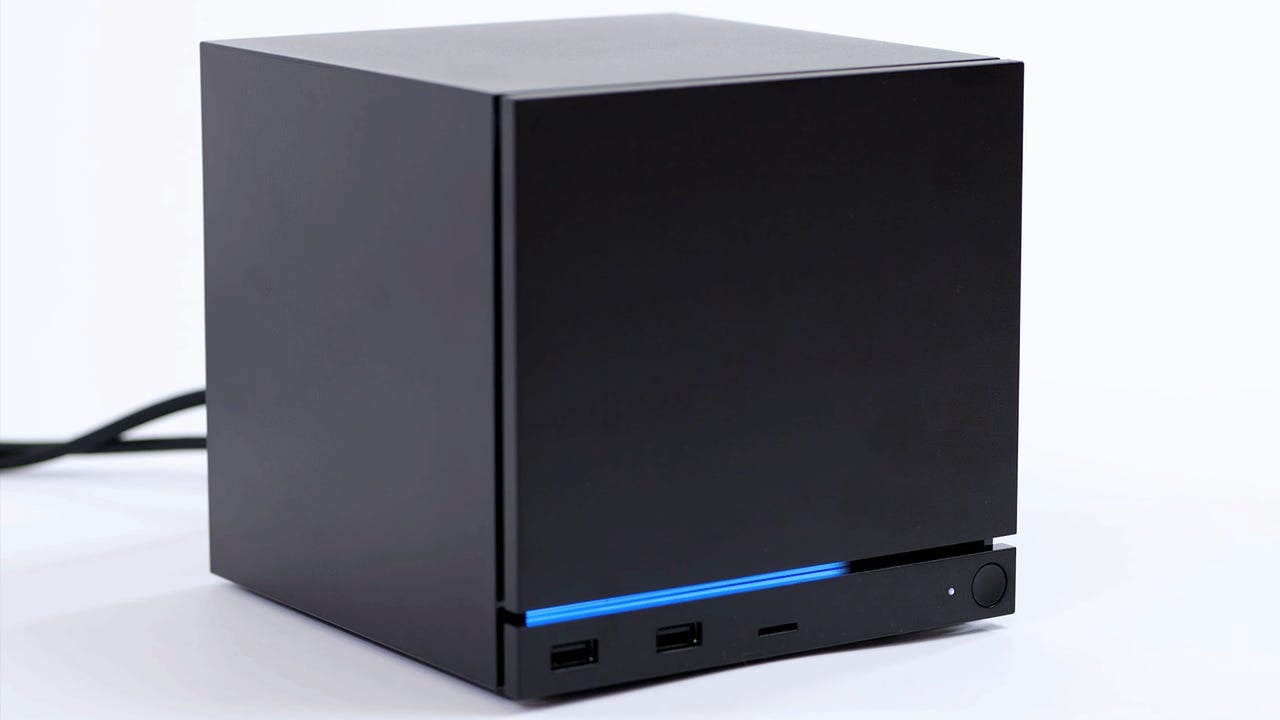
When Valve engineer Yazan Aldehayyat sat down with Bloomberg's Jason Schreier to talk about the Steam Machine, he didn't sugarcoat the state of the memory market. He dropped a detail that should unsettle anyone who's been browsing PC part prices and thinking they've already seen the worst of it.
"Honestly, it's still getting worse. Just in case people are not aware. What people are seeing on retail shelves right now, from our observations, is lagging what we're seeing from a bulk supply by at least three to six months."
Let that sink in. The DDR5 kit you're looking at on Amazon or Newegg right now? Its price was set based on bulk costs from early 2026, or possibly late 2025. The bulk prices Valve is paying today, the ones that reflect the actual current state of the supply chain, haven't filtered down to consumers yet. They will. And they'll be higher.
This isn't speculation from an analyst or a hedge. It's coming from the people who are actively trying to buy memory in volume to build the Steam Machine, Valve's $1,049-and-up living room PC that launched earlier this year. Fellow engineer Pierre-Loup Griffais put it bluntly: "We're basically building everything we can get our hands on. We're limited by memory capacity, for sure."
Valve Can't Even Get Contracts
Aldehayyat told Bloomberg that Valve anticipated sourcing problems when it announced the Steam Machine in November 2025, but the reality exceeded their projections. "We knew there was going to be an issue with sourcing," he said. "But the extent was beyond anything we actually expected."
Griffais expanded on just how precarious Valve's position is during a separate interview with Gamers Nexus last month. He described a buying process with no long-term contracts, no guaranteed supply, and no negotiating leverage. Memory manufacturers give Valve a price and a quantity on a rolling basis, and if Valve passes, those suppliers move on. There's no relationship to fall back on.
I covered Valve's earlier comments about the RAM crisis a few days ago, but this Bloomberg interview adds a critical dimension that I think a lot of PC gamers are missing. The sticker shock you feel right now when you price out a build? It's outdated. You're reacting to old numbers. The new numbers are worse, and they're coming.
Who Else Is Sounding the Alarm
Valve isn't alone here. Micron CEO Sanjay Mehrotra has said he expects the RAM shortage to persist through 2027. Xbox CEO Asha Sharma has said she expects memory costs to double again before fall 2027. Lenovo has warned that current RAM pricing may simply be the new normal. Epic Games boss Tim Sweeney said in late 2025 that high-end PC gamers would be dealing with inflated prices "for several years." Every corner of the industry is saying the same thing, and none of them are hedging.
The root cause hasn't changed. AI data centres are consuming memory at a pace that dwarfs consumer demand, and manufacturers are prioritising those contracts because they're larger and more profitable. A class action lawsuit has been filed against Samsung, SK Hynix, and Micron Technology, accusing them of colluding to artificially inflate RAM prices, but even if that suit succeeds, legal timelines don't move at the speed of your next PC upgrade.
As someone who's been building PCs since the 360 era, I've sat through price spikes before. The crypto-driven GPU drought of 2021 was miserable, but it had a ceiling because crypto mining demand was cyclical. AI demand isn't cyclical. Data centres that don't even exist yet are reserving chips that haven't been manufactured. There's no obvious pressure valve here, no moment where demand suddenly drops and supply catches up.
The Steam Machine's base price of $1,049 for 512GB already raised eyebrows at launch. Its top-end 2TB model with a Steam Controller runs $1,428. Valve has said it would love to make the device more affordable but warned a price drop won't arrive any time soon. Given what Aldehayyat is describing about bulk costs, I'd be surprised if the next revision doesn't cost more, not less.
If you're planning a PC build or a RAM upgrade in the next six months, the price you see today is probably the best price you'll see for a while. I don't love giving that kind of advice, because it sounds like fear-driven purchasing, but the data Valve is sharing points in one direction. Bulk costs are rising, retail lags behind, and nobody with actual supply chain visibility is predicting relief before 2028 at the earliest.
Stay on top of every update — find all the latest patch notes and gaming news at XP Gained. Join our Discord for live patch note alerts and discussion.
Written by
Nathan LeesGaming journalist and founder of XP Gained. Covering patch notes, breaking news, and updates across 160+ games.
Related Posts

Steam Deck Now Streams PS5 Games Without a Console
A new playtest for the Asobi: Remote Play app brings PS Plus Premium cloud streaming to Steam Deck and Steam Machine, cutting the PS5 out of the equation entirely.

Hit the Level Cap? Dragon's Dogma 2 Hard Mode Is Real
Capcom has confirmed a hard mode is in development for Dragon's Dogma 2, designed to challenge players who've hit or are approaching the level cap. The news dropped alongside a trove of details about the Dark Arisen expansion.

Stupid Never Dies Locks In October Launch with Sega
GPTRACK50's debut action RPG has a date, a price, and a co-publishing deal with Sega. It's landing right in the middle of October's brutal release window.