One Skin, Every Game: Epic Unveils Unreal Engine 6
Epic's next engine about better graphics. Unreal Engine 6 wants to make your Fortnite skin wardrobe work across every game built on it.
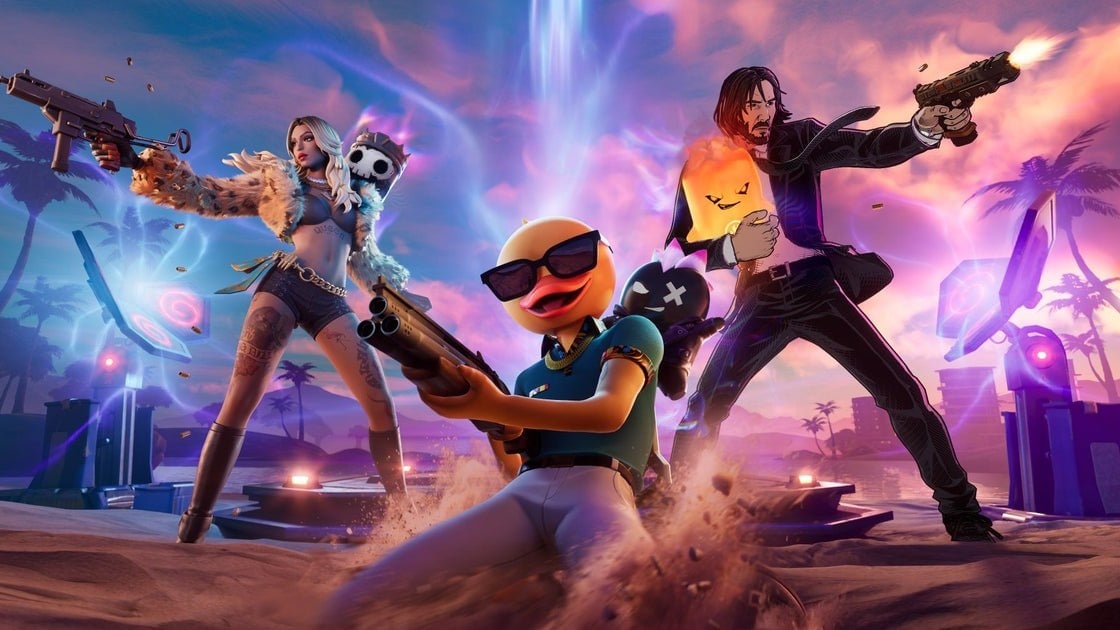
Forget ray tracing benchmarks and polygon counts for a second. The most interesting thing Epic showed during its State of Unreal broadcast on Wednesday wasn't a graphical feature at all. It was a cosmetics system: the ability for players to bring their Fortnite skins into other Unreal Engine 6 games, and for developers of those games to build outfits that work inside Fortnite.
Engine development lead Marcus Wassmer laid out the vision in a transcript shared on Epic Games' website. "Fortnite cosmetics will be our first real proof point of portability," he said. "This means you'll have the option to use a player's entitled Fortnite outfits in your own games, and you'll get the tools to build outfits for your own games that work inside Fortnite." The system will ship as an open UE6 module, meaning developers opt in rather than having it forced on them.
I think this is the most ambitious thing Epic has announced in years, and possibly the most consequential. Not because portable skins are some revolutionary concept on paper, but because of the economic gravity Fortnite carries. There are hundreds of millions of Fortnite accounts with purchased cosmetics sitting in them. If a mid-sized studio ships a UE6 game and flips the switch to let those skins appear in their world, they're instantly tapping into a player base that already has emotional and financial investment in those items. Wassmer framed it in terms of "Metcalfe's Law" and "positive-sum dynamics," which is corporate-speak, but the underlying logic is sound: every game that connects to this network makes the network more valuable.
Who Actually Benefits?
The pitch sounds great for indie and mid-tier developers who struggle with visibility. A smaller studio could theoretically let Fortnite players show up wearing their Spider-Man or Naruto skins, creating an instant familiarity bridge. And building a cosmetic that appears in Fortnite's shop? That's advertising money can't buy. But I keep coming back to the power dynamics here. Epic controls Fortnite, Epic controls UE6, and Epic will almost certainly control the approval pipeline for what cosmetics get into Fortnite's ecosystem. Developers who build on this system are building on Epic's land, and the terms of that arrangement will matter enormously.
Wassmer was careful to frame this as something bigger than Fortnite. "In the end, this isn't really a Fortnite story," he said. "It's about proving that such a mature, complex system can work at scale, and that every game that works with these systems will immediately benefit from them." He described it as the first step toward a "shared economy for smart assets" with logic and functionality that transfer between games. Epic CEO Tim Sweeney has been talking about interconnected game worlds for years, and UE6 is clearly the infrastructure play to make it real.
The engine itself is still a long way off. Early access testing is scheduled for late 2027, with Wassmer putting heavy emphasis on the word "ish" after that date. A full release would follow 12 to 18 months later, putting a realistic ship window somewhere in 2029. Beyond the cosmetics system, UE6 is being built to unify Unreal Engine 5 and the Fortnite editor into a single platform, support massively higher player counts (Sweeney referenced theoretical support for hundreds of thousands or even millions of players), and prioritise cross-platform portability over raw graphical leaps.
Then there's the AI question, which is harder to wave away. Wassmer confirmed that UE6 will feature LLMs and generative AI tools in a "central role," with support for models like Claude and Codex through the MCP protocol. He also confirmed that Epic has already opened up "pretty broad usage for code generation and AI analysis" across its internal engineering teams, which means Fortnite and likely Rocket League are already running on some AI-generated code. Alongside UE6, Epic also launched Unreal Engine 5.8 on Wednesday, which includes its own MCP plugin for LLM integration, a new Lumen Lite mode that runs twice as fast on Nintendo Switch 2, and new procedural terrain and vegetation tools.
The portable cosmetics system is the part of this announcement I'll be watching closest. If Epic gets the economics right and gives developers a genuine reason to participate without locking them into exploitative revenue splits, this could reshape how smaller games find audiences. If they get it wrong, it becomes another walled garden dressed up as an open platform. Epic has earned both optimism and skepticism in roughly equal measure over the past few years, and the details of this system, whenever they arrive, will determine which reaction was warranted.
Stay on top of every update — find all the latest patch notes and gaming news at XP Gained. Join our Discord for live patch note alerts and discussion.
Written by
Nathan LeesGaming journalist and founder of XP Gained. Covering patch notes, breaking news, and updates across 160+ games.
Related Posts

"We Didn't Deliver", FC 27 Devs on FUT's Lost Year
EA's FC 27 Ultimate Team team has done something rare: publicly admitted they dropped the ball. Here's what they're changing and why it matters.

FC 27's Biggest FUT Overhaul Kills Chemistry in SBCs
EA Sports is gutting the chemistry system from Squad Building Challenges in FC 27, replacing it with a simple score threshold. Combined with the new FUT Gallery collection mode, this is the biggest structural shake-up Ultimate Team has had in years.
Four Years Later, Mbappé Reclaims EA's FC Cover
Kylian Mbappé is back on the front of EA's football franchise for the first time since the FIFA days, headlining the Ultimate Edition of EA Sports FC 27.