Why No One at EA Can Even Pitch a New Dragon Age
Former Dragon Age producer Mark Darrah says EA's internal politics mean no one can realistically pitch a new entry, even if they wanted to.
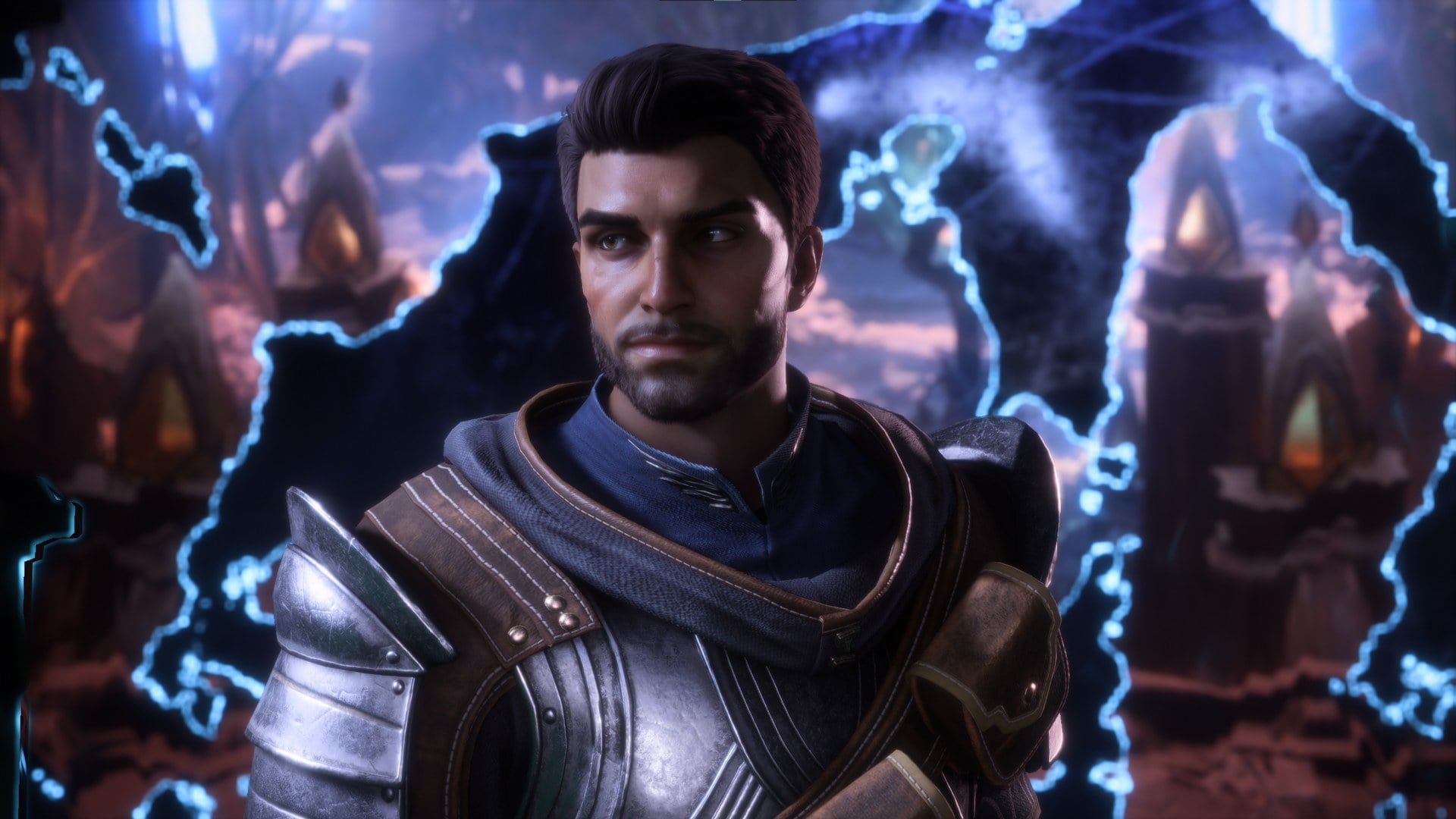
Someone at EA once described the company to Mark Darrah as "a hedge fund with a video game hobby that it wished it didn't spend so much money on." Darrah, who spent 23 years at BioWare and served as executive producer on the Dragon Age series, says that description still holds. And it goes a long way toward explaining why Dragon Age is almost certainly dead for the foreseeable future.
In an interview with FRVR, Darrah laid out the structural problem inside EA that makes reviving dormant franchises borderline impossible. It isn't simply that Dragon Age: The Veilguard underperformed commercially when it launched in 2024 after a decade-long gap and multiple internal reboots. The issue runs deeper than sales numbers.
"What I've heard is if you go and decide you're going to make a [game based on an IP]… the instant you're about to start, suddenly like three different people who think they control it come out of the woodwork and essentially like rip you apart and chew you up and spit you out."
That quote describes something I've never heard a former senior developer articulate so bluntly: EA's IP ownership is so fractured and territorial that the act of pitching a game becomes a political minefield before any creative work even begins. Multiple people within the organization believe they have authority over a given franchise, and the moment someone tries to do something with it, those competing claims surface and kill the project in its crib.
BioWare's double bind
Darrah sees two theoretical paths to a new Dragon Age, and both are dead ends. The first would be BioWare itself pitching the project. The problem: "I don't know who at BioWare would pitch a Dragon Age." The studio was downsized in early 2025 after The Veilguard's release, with an unspecified number of staff transferred to other EA teams. BioWare is currently focused on its next Mass Effect, which was announced back in December 2020. Last year, Mass Effect executive producer Mike Gamble had to publicly reassure fans that the project was still in active development and that EA remained committed to the franchise.
The second path would be another studio inside EA picking up Dragon Age. Darrah's prediction for what would happen? BioWare leadership would torpedo it. "Somebody at BioWare would essentially become one of those people jumping under the vents to rip that person apart. I suspect that it wouldn't happen for a variety of reasons."
So BioWare probably can't make it, and BioWare won't let anyone else make it. I've seen this kind of corporate deadlock play out at other publishers, but rarely has someone with Darrah's seniority described the mechanism so plainly. Dragon Age sits in a limbo where the franchise has a guardian but no champion.
EA's graveyard of dormant IP makes the situation feel even more permanent. Darrah notes that "EA owns a frightening number of IPs that are dormant." Dragon Age now sits alongside Titanfall, Mirror's Edge, Dead Space, Burnout, and Need for Speed as franchises with no visible future. The pattern is consistent: EA acquires or builds valuable IP, runs it until it underperforms expectations, then shelves it in a structure where reviving it requires navigating a maze of internal gatekeepers.
Complicating everything further is the proposed buyout of EA by a group of investment firms led by the Saudi Arabian Public Investment Fund. Darrah openly questions whether new ownership would even want BioWare at all: "Do you want BioWare at all in this world?" If the buyout goes through, decisions about which studios and franchises survive will be made by people with no history with these games. I can't see a scenario where Dragon Age becomes a priority for investors looking to streamline a portfolio.
Meanwhile, fans aren't waiting around. A total conversion mod called Thedas at War just launched on Steam Workshop for Crusader Kings 3, letting players explore the continent of Thedas during the Glory Age, a time period the mainline games never covered. It features playable mages, factional conflicts across Ferelden and Orlais, and custom events drawn from deep Dragon Age lore. When a volunteer mod team is doing more with a franchise than the company that owns it, that says everything about where things stand. EA doesn't have a Dragon Age problem. It has a structural inability to use the things it owns.
Stay on top of every update — find all the latest patch notes and gaming news at XP Gained. Join our Discord for live patch note alerts and discussion.
Written by
Nathan LeesGaming journalist and founder of XP Gained. Covering patch notes, breaking news, and updates across 160+ games.
Related Posts
The Smurfs Movie Cost Nothing. Games Should Copy That.
Former BioWare executive producer Mark Darrah thinks the games industry should look at how movies fund themselves, and the Smurfs example is wilder than you'd expect.
Dragon Age Vet Says Live Service Is Killing Entire Genres
Mark Darrah, who spent 23 years at BioWare and produced the Dragon Age series, argues the industry's dependence on microtransactions is strangling genre diversity and suggests games should borrow revenue models from Hollywood.
Anthem Died in 2 Years. Inquisition's PS3 Lasted 11.
EA is closing Dragon Age: Inquisition's PS3 servers on April 28, more than 11 years after launch, quietly outlasting BioWare's ambitious live-service bet by nearly a decade.