Overwatch Director's Take: Future Formats Patch Notes (15th July 2026)
Team 4 is testing 6v6 formats through Quick Play Hacked events to address tank role stress and match fairness, with two experiments running later this month.
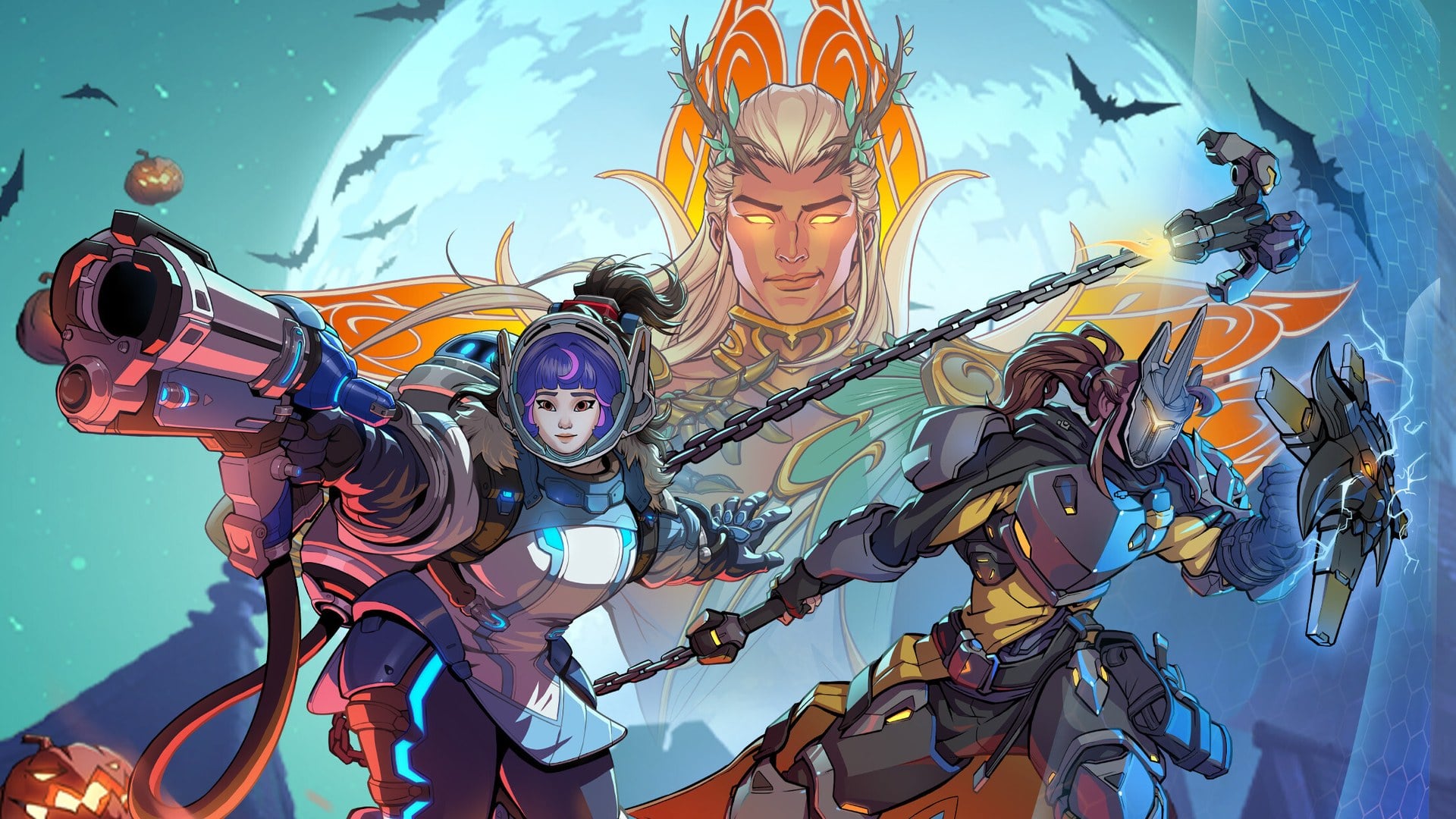
Team 4 is running two experimental format tests in Quick Play Hacked this month, and they're not messing about. The core issue: tanks in 5v5 carry too much weight, leading to stress swaps and balance headaches. With two active tanks per team, Blizzard reckons it can soften those rough edges while making matches feel less like steamrolls.
Flex Queue (July 16-19) introduces a 1-3-2 hybrid where one damage dealer can flex into tank at any time, but only one. You might start as Tracer and swap to Zarya mid-match if your team needs it, but your Hanzo can't also go tank. This sidesteps the queue time nightmare of traditional 6v6 role queue while keeping damage players happy. The most popular role stays popular. The trade-off is social pressure on damage dealers to tank, though spreading that burden across three people might make it feel fairer.
Dynamic Queue (July 30-August 2) blends both approaches. The matchmaker aims for 2-2-2 but shifts into Flex Queue format when tank queue times spike, treating it as a release valve. This should let most matches run in the preferred format without tanking queue times, though consistency between matches could take a hit. The full breakdown of both experiments, including how Blizzard plans to use this data, is below.
Full Patch Notes
✓ FixHey, everyone! One thing I hope you absorb from our blogs, streams, and social media posts is the fact that we regularly play and love Overwatch on Team 4. All of us have a stake in how enjoyable the experience is because we’re queueing up, too. We have our own big dreams and gut feelings about how the game can grow and evolve as time goes on.
Future innovation is an important topic on Team 4, and game format is one of the most frequently discussed systems; that’s what we’ll be exploring today. Changes like this can have a big impact on the core feel of the game. We don’t take them lightly, but we are committed to continually improving Overwatch and this is one of the biggest ways we can do it. So, buckle up!
Hypothesizing
Discussions around format on social media often focus on specific team sizes or past versions of Overwatch. But the question we’re asking ourselves is broader than that: What if there was another way?
In the latter half of Season 3, we’re running a few experiments to test exactly that. These Quick Play Hacked events will be in a 6v6 format and will run for two weekends this month. With these tests, we're hoping to find ways of making matches more dynamic in Role Queue, improving the tank experience, and removing some of the volatility of team fights while also removing some of the pain points that players have with our current formats.
You’ve told us the Tank role often plays too big of a factor in determining the outcome of a standard 5v5 match. Single Tanks feel that responsibility and can stress or counter swap on respawn, causing mismatches in team compositions. Tanks can also be fairly overpowered in 1v1 situations with other roles and that can be difficult for us to balance. With the potential of two active tanks per team, we see an opportunity to test different balance tuning that might soften these rough points.
Additionally, most matches in Overwatch are very fast and dynamic. This can be great! I think a lot of us enjoy the swift action and impact we can have…but that speed can also distort community perception of matchmaking and balancing issues. Stomps feel more frequent and steamrolls from early game ultimate economy and lost team fights can make matches feel unfair. Several factors in these experiments could offer more consistency when it comes to match fairness, perceived or otherwise.
Experimental modes like QPH and limited time events (like Junkenstein’s Lab) give us fantastic feedback and offer data we sometimes use to shape the future of Overwatch. As a great example, Pickable Passives in a 2024 Quick Play Hacked showed us the path to Perks and hinted at the community’s enthusiasm for choice before that system was added.
Before we move on to the details, there’s a very important caveat here: the result or success of these experiments doesn’t necessarily mean that we’re going to be changing the main format of the game. These findings could inspire us to tweak existing core modes or create new Arcade modes. Like with any good experiment, we won’t know the results until we complete all the steps.
Flex Queue
Our first experiment (running from July 16-19) is Flex Queue. We’re testing a hybrid format between Role Queue 2-2-2 and Open Queue. You’ll queue into a flexible 1-3-2 team format where there will always be at least 1 Tank, 3 Flex Damage dealers, and 2 Supports.
The twist in this Quick Play Hacked is that any of the Damage dealers can choose to play a Tank Hero, but only one of them can do so at a time. If you start as Tracer and realize your team needs more bulk, you can come back as Zarya for a little more oomph, but your Hanzo can’t also swap to Reinhardt. You can swap back to Damage any time and another Damage dealer can take over the Tank role if they’d like. In essence, teams will either have 2 Tanks and 2 Damage dealers or 1 Tank and 3 Damage dealers.
We find a few things exciting about this Flex Queue experiment:
- This format gets around the queue time issues when using Role Queue for 6v6—we no longer have to wait on 2 Tank players to put a match together. Damage is still the most popular role in the game and this format acknowledges that.
- It provides a slightly more dynamic experience than straight up 2-2-2 would. There are two valid team compositions available to each team and those compositions can dynamically change over the course of the match. Different Damage dealers can flex at different times. Ideally, this dynamic flexibility could lead to greater variety in matches, while (hopefully) still being consistent enough to feel competitive.
- It’s more consistent than Open Queue, which can have matches with zero Tanks, four Damage Heroes…or even six Damage dealers!
There are a few downsides to this format and the biggest is the potential social pressure for Damage dealers to play Tank. But if the burden is shared among 3 people with more freedom to play different Heroes, will it feel acceptable? We're hoping to find out!
Dynamic Queue
The second test (running July 30 to August 2) is also 6v6 and includes elements of the Flex Queue format from our first experiment. We’re calling this Dynamic Queue!
Our matchmaker will try to create a blend of Role Queue 2-2-2 matches and Flex Queue matches. It will be aiming for 2-2-2 matches, but based on the number of people queued for Tank (which is our current bottleneck) it will start matches in the Flex Queue format mentioned above. Think of the shift into Flex Queue format as a “release valve” for the 2-2-2 queue.
The benefit of this mode is that it should allow a substantial number of matches to be run in what we anticipate will be the most preferred format, 2-2-2. And it’ll do this without a major impact on queue times. Additionally, if Flex Queue matches are the minority, this might take some of the sting away from Damage dealers feeling pressure to play Tank. When you think about it, there really isn’t a queue like this in Overwatch. Our current Flex role mostly puts you into Tank due to how queue populations shake out. But if queueing for this version of Flex meant you got to play Damage 70% of the time and the other 30% might include the opportunity to swap to Tank, things could feel more fresh and fair.
The biggest downside of this mode is the loss of consistency from match to match. This could reduce the competitive feel of the game and that’s something we’ll be keeping a close eye on. We're excited to see how you all feel about it!
Game Mode Data
One thing our current data shows is a changing trend in participation when it comes to certain modes. As of June 28, here are some of our statistics for daily player counts for a few different modes. (Players can be counted for every mode they play in a session and all modes aren’t listed, so these numbers won’t add up to the standard 100%.)
- Unranked Role Queue 5v5: ~54% of daily players
- Ranked Role Queue 5v5: ~37%
- Unranked Open Queue 6v6: ~19%
- Ranked Open Queue 6v6: ~8%
- Unranked Mystery Heroes 6v6: ~4%
- Stadium Ranked: ~3%
- Stadium Unranked: ~3%
Overall, 5v5 has maintained its majority and 6v6 continues to see an increase in popularity. Stadium, meanwhile, has settled into a dedicated, smaller audience. With this in mind, while we'll continue supporting Stadium with seasonal balance updates, rank resets, and rewards, we’re not planning on expanding Stadium with new Heroes or maps. Instead, we're taking what lessons we've gleaned from building it and applying those lessons (and those talented devs) to our future plans.
Collecting Data
The most important part of our upcoming experiments is you! The enjoyment you and the folks you queue with get out of Quick Play Hacked modes and limited time events tells us where to put our attention in the future.
Overall, the most helpful thing you can do for us is very simple: play the experimental modes! Give them a chance and go into those queues with an open mind. The pace of fights and general vibe of these matches may seem very different. Spend time getting used to how they feel and see if your initial reactions change over the mode’s duration.
Our first versions of these tests are exactly that—think of them like a rough draft. If we were to create more of these or build upon the foundations, we would put more energy into balance, game readability, and fully tuning the matchmaker to prioritize when players get the 2-2-2 and 1-3-2 variants.
In reality, no single weekend of Quick Play Hacked is going to give our team enough clarity to completely base future decisions on data alone. Community feedback—especially about how fun or fulfilling the changes feel—is what truly pushes us in certain directions.
Conclusions
The Overwatch team knows the upcoming experiments are going to generate a lot of discussion. Try to meet those who don’t share your opinions with curiosity and kindness. The reason why we experiment publicly (and invite you all along) is because we want to bring all of you into the process of moving the game forward in the best possible direction.
Regardless of the results of these experiments or those that follow them, I know that we will continue to make Overwatch the best hero shooter it can be. Have fun getting scientific and let’s make a great game!
EDIT, 9:50 AM PDT: Hey! We previously listed the incorrect dates for the second Quick Play Hacked, Dynamic Queue. The correct dates (July 30 to August 2) are now listed. Thanks!
Sources
Stay on top of every update — find all the latest patch notes and gaming news at XP Gained. Join our Discord for live patch note alerts and discussion.
Written by
Nathan LeesGaming journalist and founder of XP Gained. Covering patch notes, breaking news, and updates across 160+ games.
Related Posts
Diablo 4 3.1.2 Build #73020 (All Platforms) Notes (24th July 2026)
The Diablo IV team has patched several critical spawning issues plaguing Season of Death Awakening, plus a Rogue damage fix that should smooth out endgame runs.
Hearthstone 36.0.3 Patch Notes (21st July 2026)
Hearthstone's first major balance patch for Escape from Violet Hold is live, targeting underperforming classes and reining in dominant strategies across Standard and Wild.

StarCraft II 5.0.16b Hotfix Patch Notes (16th July 2026)
Blizzard's latest hotfix rebalances Protoss and Terran against Zerg, with Command Center cost cuts and Colossus buffs leading the charge.