No Talking to Strangers in Fortnite Under New UK Law
The UK government's sweeping social media ban for under-16s doesn't stop at TikTok and Instagram. It explicitly targets stranger communication and livestreaming in online games, and nobody seems sure how it'll actually work.
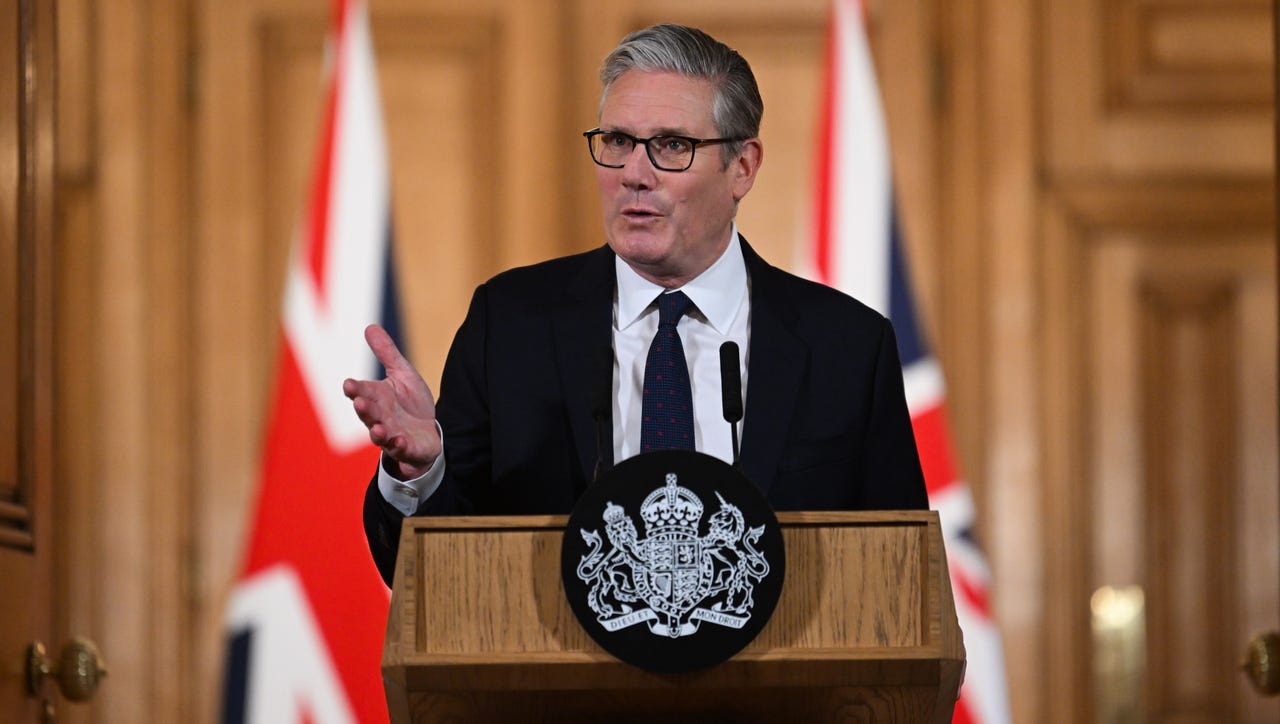
"Is there a situation in the offline world where you would just let your child pair up with a stranger, an adult, that you don't know anything about?" That was UK Prime Minister Keir Starmer's pitch from Downing Street today as he announced a sweeping social media ban for under-16s. The headline platforms are the ones you'd expect: TikTok, Instagram, Snapchat, YouTube, Facebook, and X. But buried in the announcement is a line that should have every multiplayer game developer paying attention: the law also targets "stranger communication" and livestreaming on "gaming sites."
That means games like Fortnite, Roblox, and potentially any online multiplayer title with voice or text chat could be forced to block under-16s from communicating with anyone outside their friends list. Livestreaming from consoles would also be restricted. The government plans to pass the regulation before the end of 2026, with enforcement beginning in spring 2027.
The contrast between the ambition and the detail here is staggering. Starmer's language was sweeping, calling it "world-leading action" on online gaming. But the government has simultaneously admitted these changes will be "hard to regulate, hard to enforce," and has tasked Ofcom with studying the best ways to verify ages, which could include face scans or ID checks. So the policy is confirmed, the mechanism is not. That's a pretty significant gap when you're talking about restructuring how millions of kids interact with the games they play every single day.
What This Means for Games
England's Children's Commissioner Rachel de Souza framed the gaming angle explicitly, telling the BBC that "boys often aren't on social media. They're often spending three or four hours a day gaming, and those games often have features that allow a 55-year-old in Arizona to come in and speak to a nine-year-old." That's the argument driving the gaming provisions, and it's not an unreasonable concern. But the implementation raises enormous questions. Fortnite's squad fill, Roblox's entire social layer, Destiny's LFG, random matchmaking in practically any competitive shooter; all of these involve talking to strangers. Stripping that out for under-16s doesn't just limit a feature, it changes what those games are.
UK trade body UKIE moved quickly to draw a line, welcoming the government's recognition that "games are distinct from social media." CEO Nick Poole pointed to the PEGI rating system and existing platform-level parental controls, noting that major platforms already switch off communication features by default for child accounts. UKIE's position is essentially that the industry is already doing this work, and the "gaming sites" language in the announcement refers to something other than traditional video games. GamesIndustry.biz has contacted the Department for Science, Innovation and Technology for clarification on what "gaming sites" actually means, and that answer matters a lot.
I think the instinct behind this is sound. Kids shouldn't be exposed to unmoderated contact with random adults online, and any parent who's heard an open lobby in a Call of Duty game knows the current system isn't working. But there's a real risk that vague legislation forces developers into blunt, one-size-fits-all solutions. Xbox has already rolled out age verification for voice and text chat with non-friends in the UK under the existing Online Safety Act. If the new law simply codifies what platforms like Xbox are already doing, the impact on gaming could be minimal. If it goes further, requiring ID verification just to play a multiplayer match, that's a different story entirely for both developers and players.
The ban follows Australia's under-16 social media restriction from December 2025, with similar legislation reportedly in progress in Spain, Portugal, France, and several other countries. Not everyone is convinced it'll work. The Molly Rose Foundation, set up in memory of 14-year-old Molly Russell, told The Standard that a ban "will fail to tackle fundamental product safety risks" and argued it reduces pressure on platforms to fix harmful algorithms, since "a majority of children will continue to use high-risk sites" regardless.
As Wired noted, enforcement is the question that keeps coming back. The government can pass whatever laws it wants; it's game developers and platform holders who have to build the systems. And right now, nobody has explained what "highly effective age assurance" looks like in practice for a nine-year-old trying to queue into a Fortnite match. Until that detail arrives, this is a policy with a clear destination and no map.
Stay on top of every update — find all the latest patch notes and gaming news at XP Gained. Join our Discord for live patch note alerts and discussion.
Written by
Nathan LeesGaming journalist and founder of XP Gained. Covering patch notes, breaking news, and updates across 160+ games.
Related Posts

Fortnite, Roblox Targeted in UK's Under-16 Online Ban
The UK government's sweeping social media ban for under-16s extends directly into online gaming, with plans to block stranger communication in games like Fortnite and Roblox by spring 2027.

6 Years Later, Fortnite Is Back on iPhones Worldwide
Epic Games has restored Fortnite to the Apple App Store in nearly every country, calling it "the beginning of the end of the Apple Tax worldwide" as the legal fight heads to the Supreme Court.
Fortnite Gave Tracer a Bigger Butt Than Overwatch Did
Fortnite's Overwatch collaboration dropped this week, and somehow the biggest talking point isn't the maps, the weapons, or D.Va. It's Tracer's butt. Again.