30 Billion Pokémon Go Scans Built the AI Behind War Drones
Players who scanned PokéStops helped build an AI navigation system now being developed for military drones. Niantic Spatial says the data isn't part of its deal with defense firm Vantor, but the damage is already done.
"Without the large number of scans from all those gamers, the development of this system would never have progressed so quickly," Jeroen van den Hoven, Professor of Ethics and Technology at Delft University of Technology, told Dutch newspaper Trouw. "The players have indirectly contributed to military applications, in a perhaps minimal but nonetheless effective way."
That quote should sit with every Pokémon Go player who ever pointed their phone at a fountain or a statue because the game asked them to. According to reporting by DroneXL, compiling investigations from Dutch outlets Trouw and Volkskrant, roughly 30 billion AR scans collected from Pokémon Go players since 2021 became the raw material for a Visual Positioning System, or VPS. That system matches what a camera sees against a detailed 3D model of the world, allowing navigation even when GPS signals are jammed or spoofed. Two recognizable reference points a few pixels wide can be enough to fix a location. The technology is now at the centre of a partnership between Niantic Spatial and Vantor, a defense intelligence company whose software suite includes products designed specifically for military drones.
The partnership, announced in December 2025, was framed around solving "GPS unavailability, spoofing, interference, and jamming" for drone piloting. Niantic Spatial would handle ground-based positioning; Vantor would handle the aerial side. Together, the pitch was an integrated system that could keep drones operating precisely in GPS-denied environments. That language alone should have raised alarms. GPS-denied environments, in practice, means warzones where electronic countermeasures are actively deployed. I don't think you need a military background to connect those dots.
The Denial That Isn't One
Niantic Spatial has now issued statements to multiple outlets insisting that Pokémon Go data is not part of its agreement with Vantor, and that since Scopely acquired Niantic's gaming business, the game's data is no longer shared with Niantic Spatial at all. "AR Scans collected through Pokémon Go were submitted voluntarily by players who opted into the feature and were subject to the applicable Terms of Service and Privacy Policy at the time," a spokesperson said. Vantor, for its part, denied that Pokémon Go data would be used directly, but when pressed by Trouw, the company was unwilling to say whether the model it intends to deploy was trained using that data.
That distinction matters enormously, and neither company will close the gap is telling. The scans trained the AI models. The AI models are the product being shared. Saying "we're not sharing the scans" while sharing models built on those scans is a technicality dressed up as a denial, and I'm not buying it. Niantic Spatial's own CTO, Brian McClendon, described the system at announcement as giving platforms "the ability to perceive, align, and operate in a shared frame of reference, even when traditional GPS is unavailable." The scans are baked into the foundation. You can't un-bake them.
None of this is new territory for Niantic. The company has a long history of privacy controversies, and outlets like MassivelyOP have been tracking the data pipeline since 2019. When Niantic introduced AR Mapping tasks in 2020 and Powered-Up PokéStops in 2021, the terms of service granted the company a transferable, sublicensable license to those scans, meaning they could be sold or shared with third parties. Players technically opted in. But opting in to help "create exciting new AR experiences" and opting in to train navigation systems for military drones are two wildly different things, and no reasonable person would have understood the former to include the latter. The story has since been going viral on social media, with players expressing exactly that kind of betrayal.
The timeline makes the corporate separation argument even harder to swallow. Niantic collected the scans for years. Niantic Spatial was formed when Saudi-backed Scopely purchased Niantic's gaming business for $3.5 billion in 2025. The scans had already been collected. The models had already been trained. Niantic Spatial then entered its partnership with Vantor in December 2025. The data did its job before the corporate walls went up. Saying Pokémon Go data isn't currently being shared with Niantic Spatial is answering a question nobody asked. The question people are actually asking is whether the AI they trained on years of player scans is now helping build software for military drones, and on that, both companies have given answers that carefully avoid saying no.
Field testing of the Niantic Spatial/Vantor system was reportedly set to begin in early 2026. Millions of players scanned real-world locations because a game they loved asked them to, and that data ended up in the hands of a defense contractor building drone navigation software. Whatever legal cover the terms of service provided, this is a trust problem that no corporate restructuring can fix.
Stay on top of every update — find all the latest patch notes and gaming news at XP Gained. Join our Discord for live patch note alerts and discussion.
Written by
Nathan LeesGaming journalist and founder of XP Gained. Covering patch notes, breaking news, and updates across 160+ games.
Related Posts

Pokémon Go Fulfilled Its 2015 Trailer Promise. Fans Are
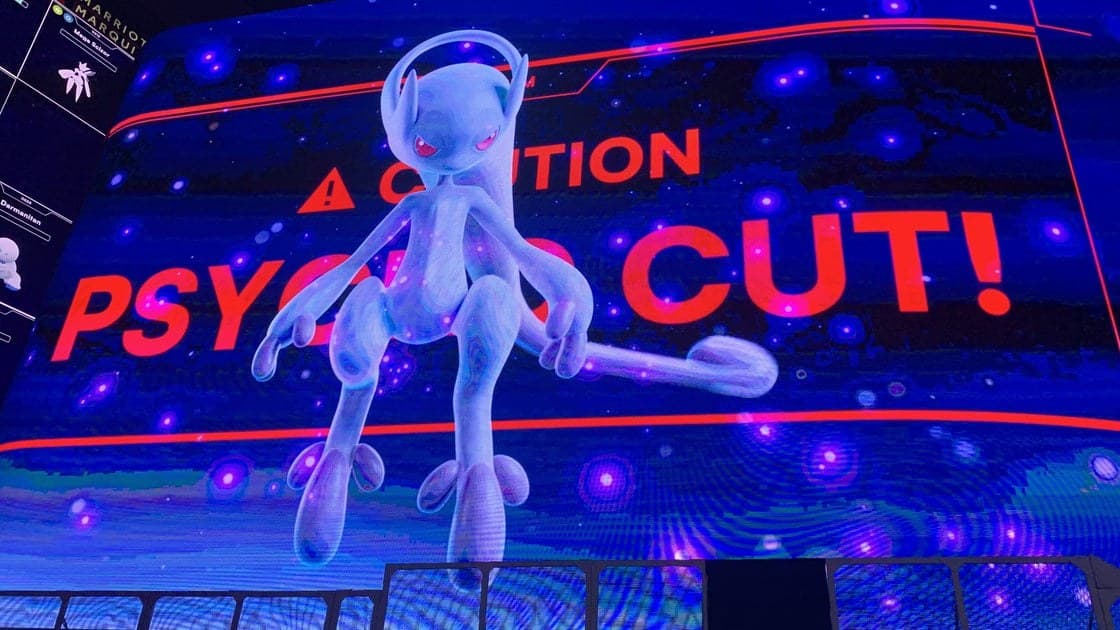
Pokémon Go's 10th anniversary event brought the original trailer's Times Square Mewtwo fantasy to life. Then it handed a guaranteed perfect Mewtwo to roughly 1,000 invited players and told everyone else to watch.
1,000 Players Got a Perfect Mewtwo. Millions Didn't.
Pokémon Go celebrated its 10th anniversary with a Times Square Mewtwo raid that gave roughly 1,000 invited players a guaranteed perfect-stat catch. The millions who've kept the game alive for a decade got to watch it on social media.
A Chainsaw, a Rock, and $12K in Stolen Pokémon Cards
Clayton Warren allegedly tried a rock first, then upgraded to a battery-powered chainsaw to break into a Pokémon card shop in Lake Park, Florida. He left behind blood, his license plate, and one of the most incompetent heist stories of the year.